
Welcome to Miss Angie’s Halloween Speech & Language Fun!
Halloween goodies can be so much more than treats and toys!
With a little creativity, everyday Halloween favorites can become fun opportunities for talking, listening, describing, thinking, requesting, taking turns, playing and learning.
You found this page through your Halloween bag — which means you’re ready to turn some ordinary Halloween goodies into opportunities to
PLAY • TALK • LEARN!
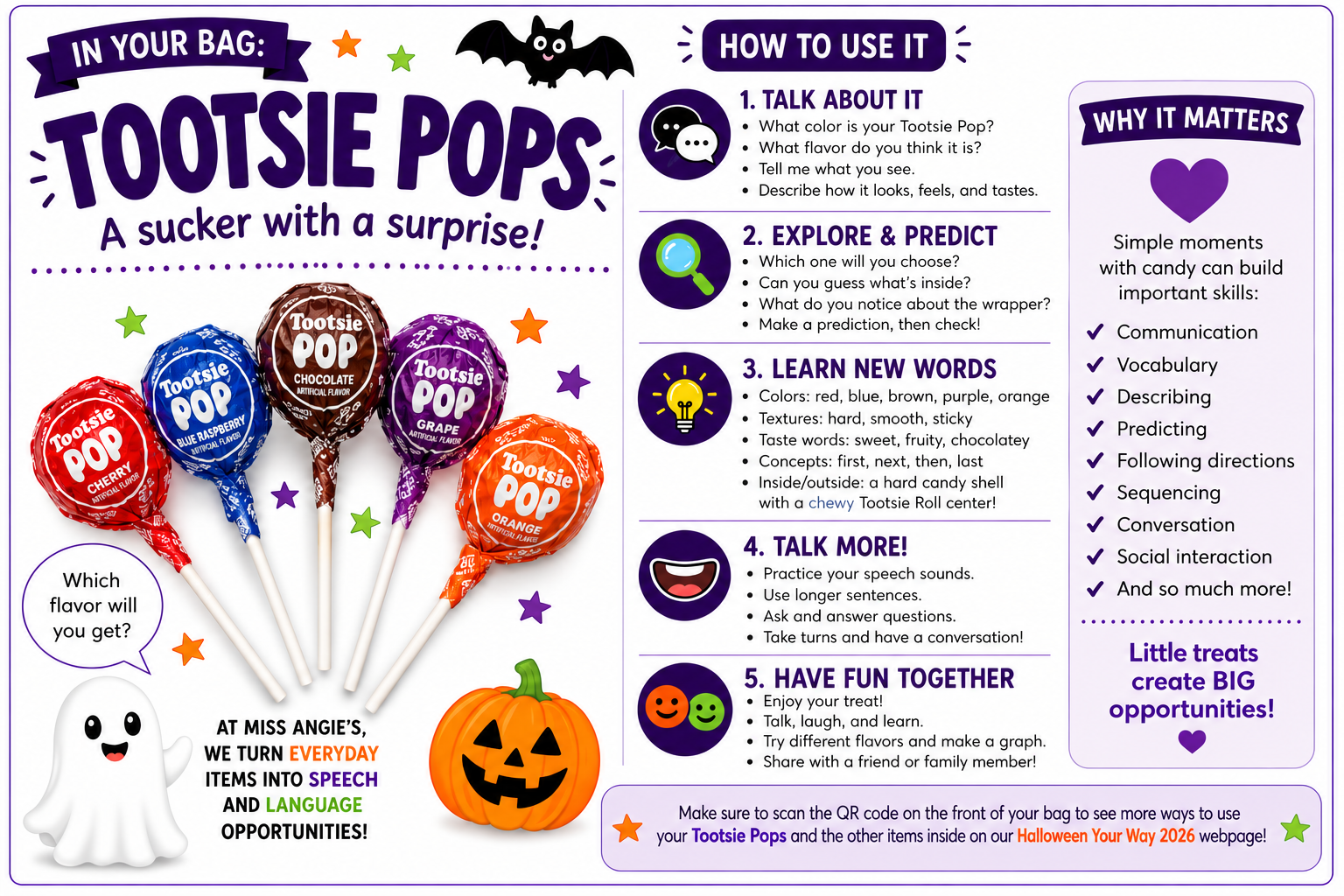
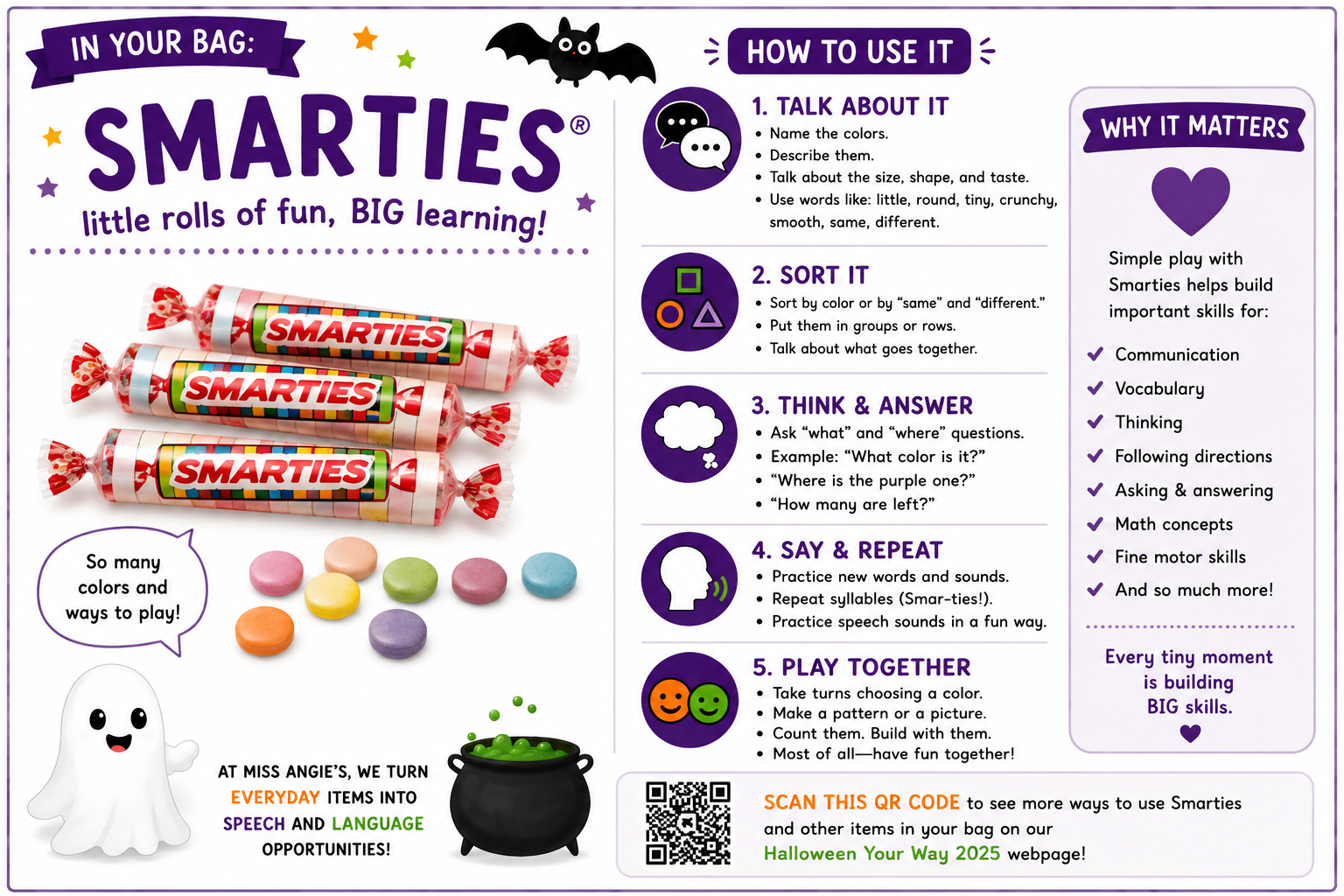
What’s in Your Bag?
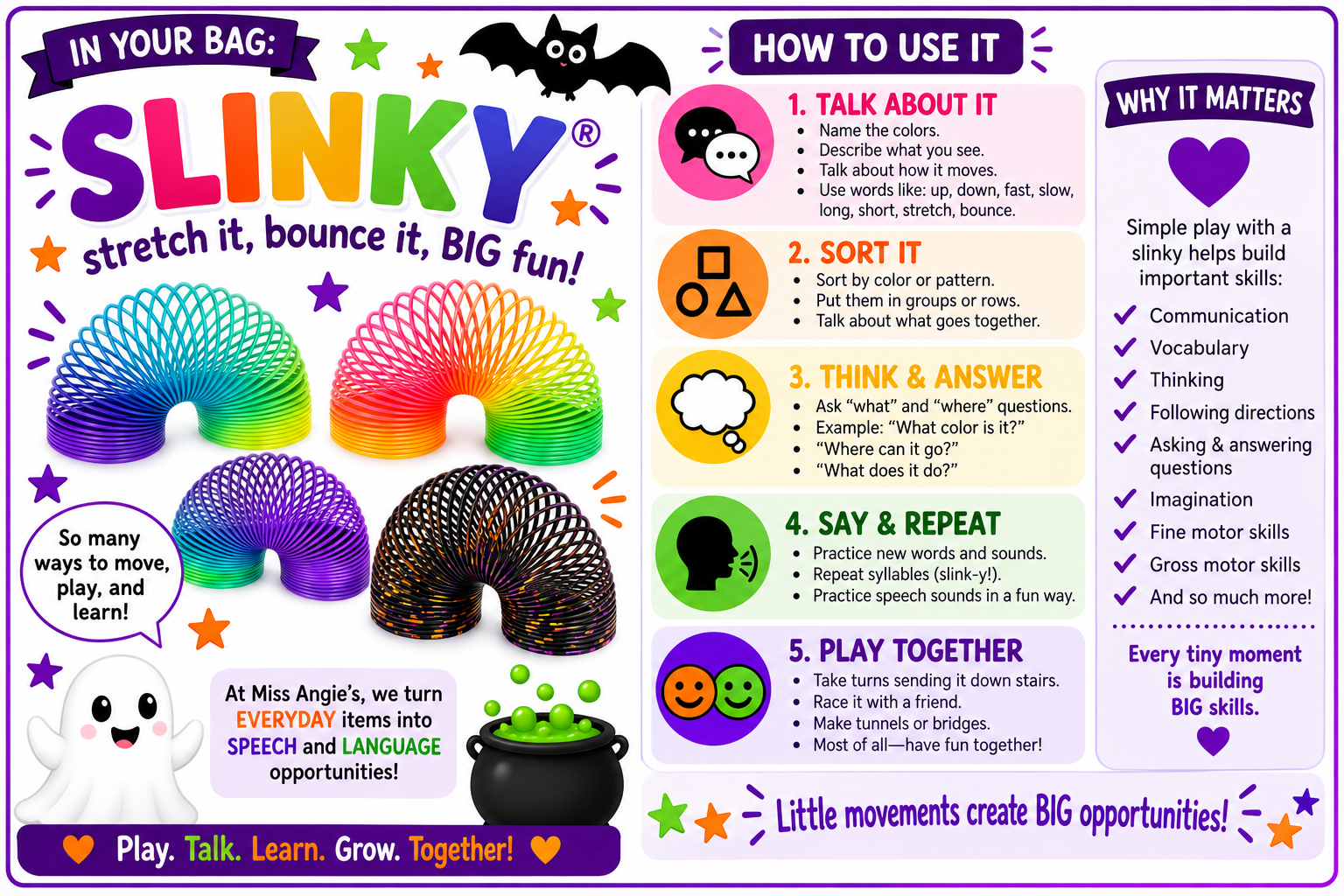
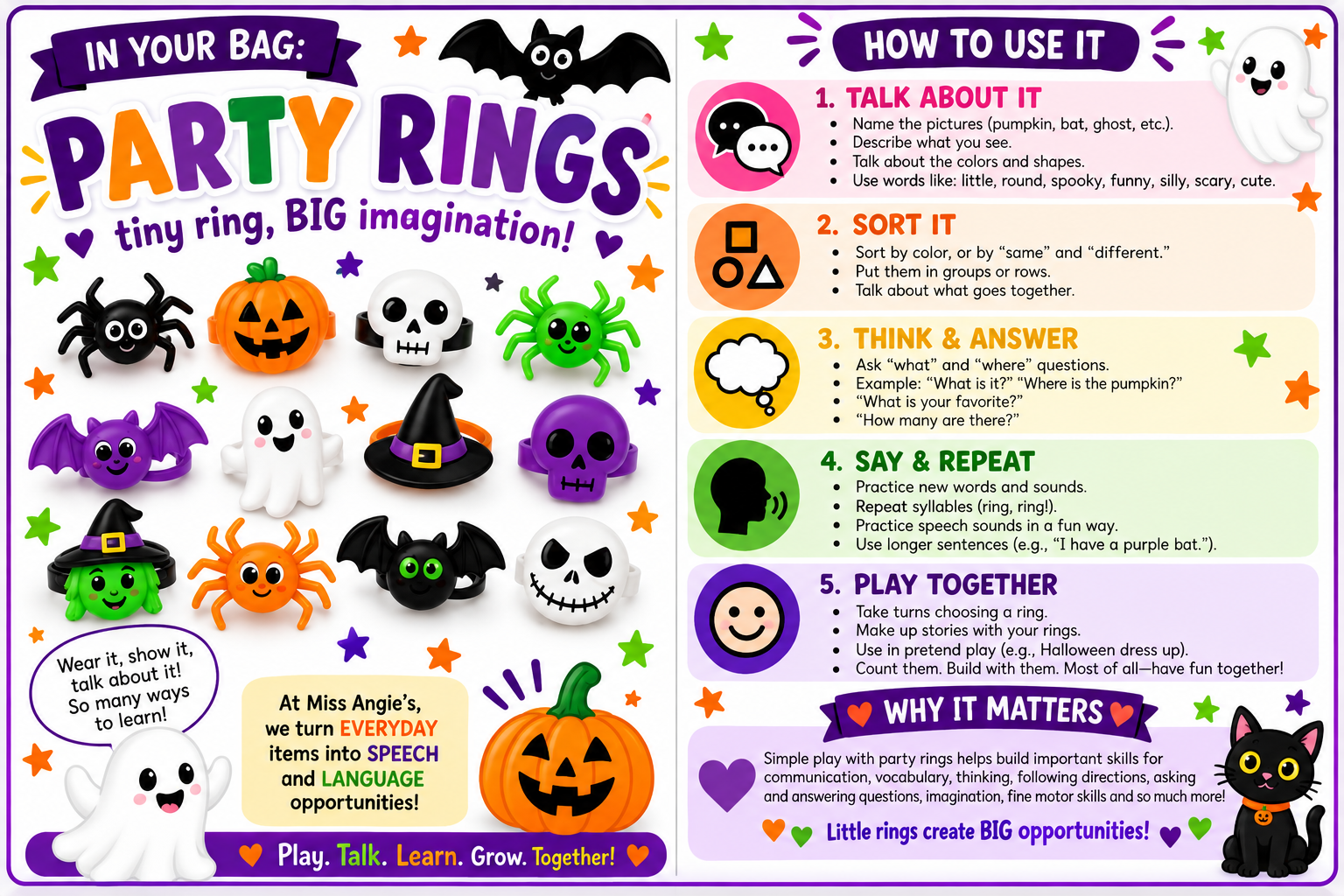
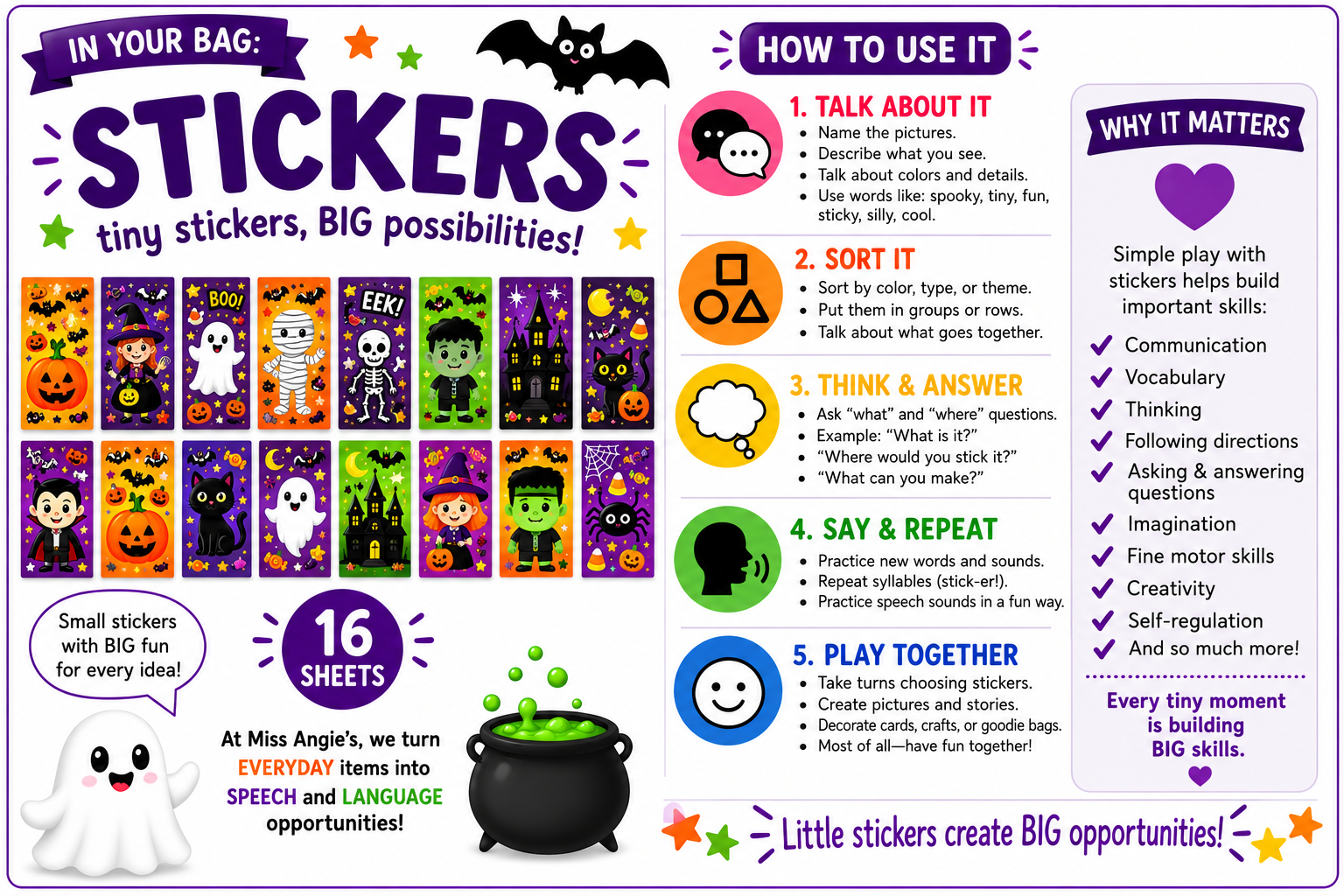
Find your goodies below and discover fun ways to PLAY • TALK • LEARN!
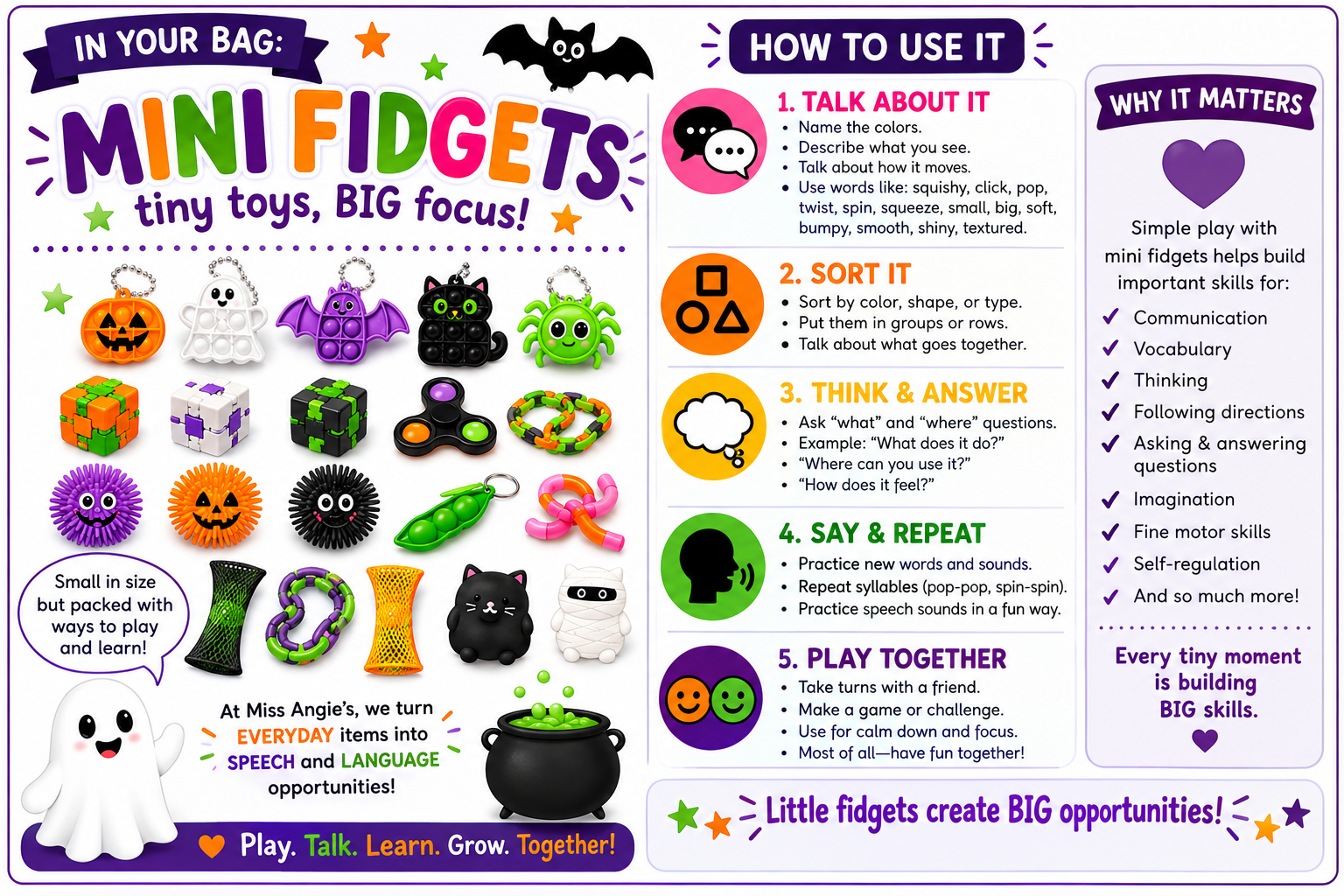
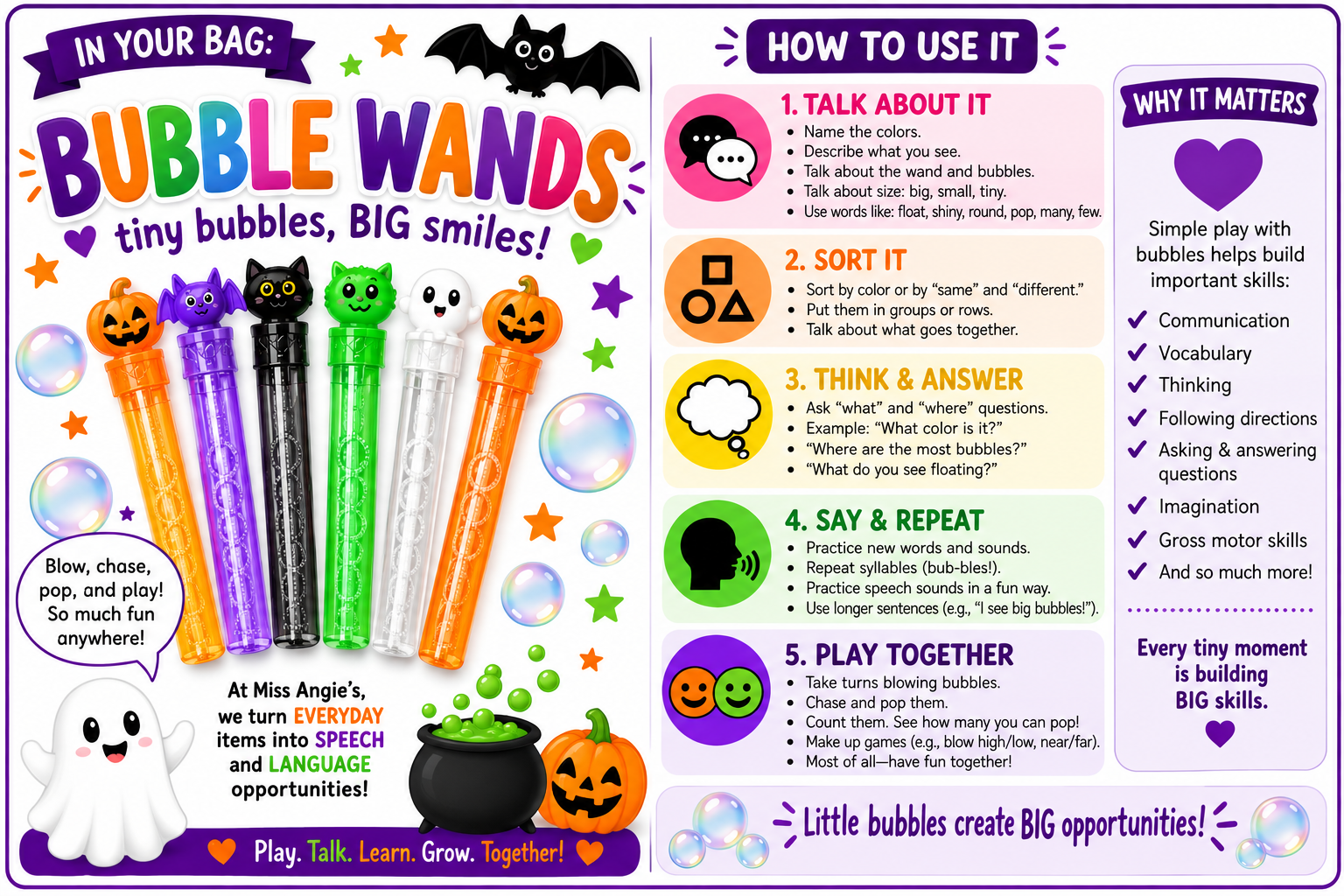
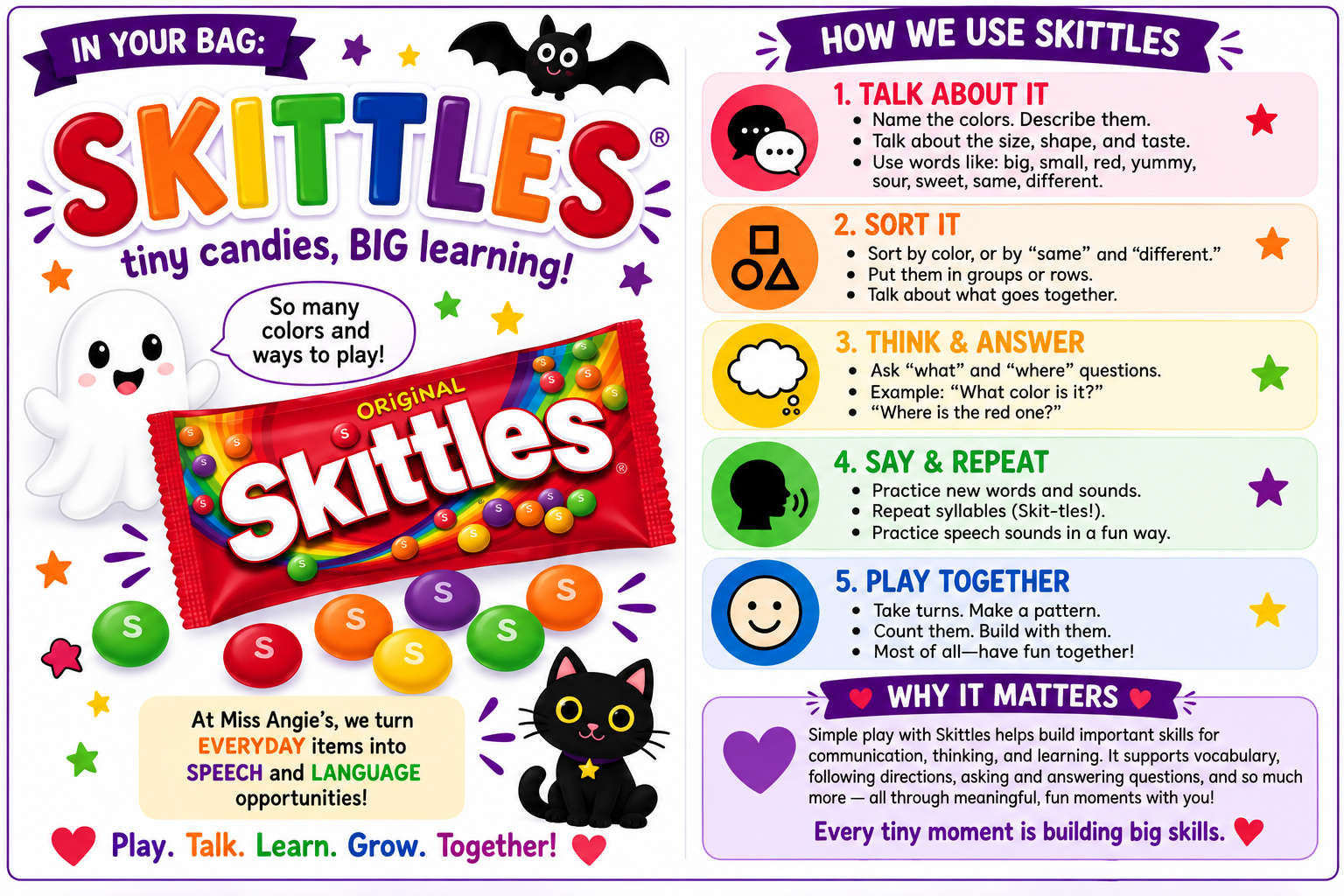
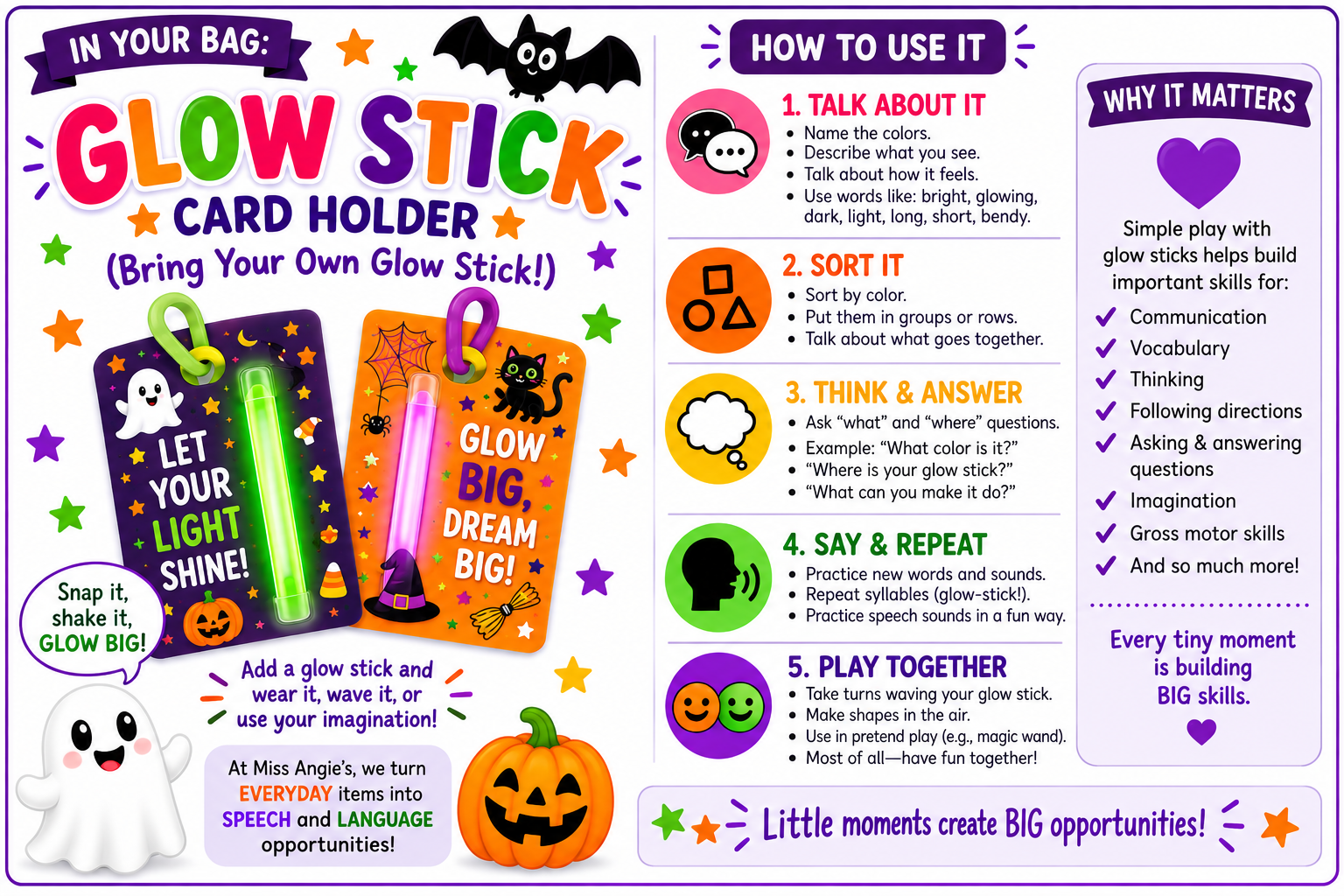

Tongue Twisters & Jokes: Why They Matter
Tongue twisters and jokes aren’t just silly Halloween fun! They can provide playful opportunities to practice speech sounds, listen closely to words, notice how sounds are different, think about language and enjoy conversation together.
Tongue Twisters: Speech + Sound Awareness
Speech Sound Practice: Repeating silly phrases gives children opportunities to practice particular speech sounds in words and sentences.
Sound Awareness: Listen for sounds that are the same or different. Try finding all the /s/, /sh/, /r/ or /l/ sounds in a tongue twister.
Self-Monitoring: Start slowly and clearly. Then try it a little faster. Can your child hear when a word changes or becomes tricky?
Most importantly — keep it fun! A tongue twister doesn't have to be perfect to be great speech and language practice.
Try saying these tongue twisters fast three times without getting tongue tied:
Silly Sammy swiftly slid down the silver slide.
Shelly’s shiny shoes shimmer in the sunshine.
Larry the lizard loves lemon lollipops.
She sells seashells by the spooky seashore.
Purple pumpkins pop up past the porch.
Three thirsty witches threw thick thread.

Jokes give children a fun reason to think beyond the literal meaning of words.
Word Play: Puns and jokes help children notice words that sound alike or have more than one meaning.
Thinking & Inferencing: Understanding why something is funny often requires children to connect information and figure out what the speaker really means.
Social Communication: Telling a joke involves taking turns, timing, listening to another person and noticing their reaction.
Connection: Most importantly, laughing together creates natural opportunities for interaction and conversation.
Jokes & Humor
Language + Social Communication
Jokes
Q: Why did the ghost go to speech therapy? Q: Why are ghost bad liars?
A: Because he kept saying Boo-Boo! A: Boocause you can see right through them!
Q: What’s a mummy’s favorite music? Q: What do you call a witch that lives at the beach?
A: Wrap music. A: A sand-Witch!
Q: Why did the vampire need mouthwash? Q: How do you fix a broken pumpkin?
A: Because he had bat breath. A: With a pumpkin patch!
Quick Parent Tip:
Start slowly and make it playful.
Say the tongue twister together before trying it independently.
Emphasize a target sound if your child is already working on that sound.
Try a mirror or make a silly video together so your child can see and hear themselves.
Celebrate effort — not perfection. The goal is communication, confidence and having fun together.
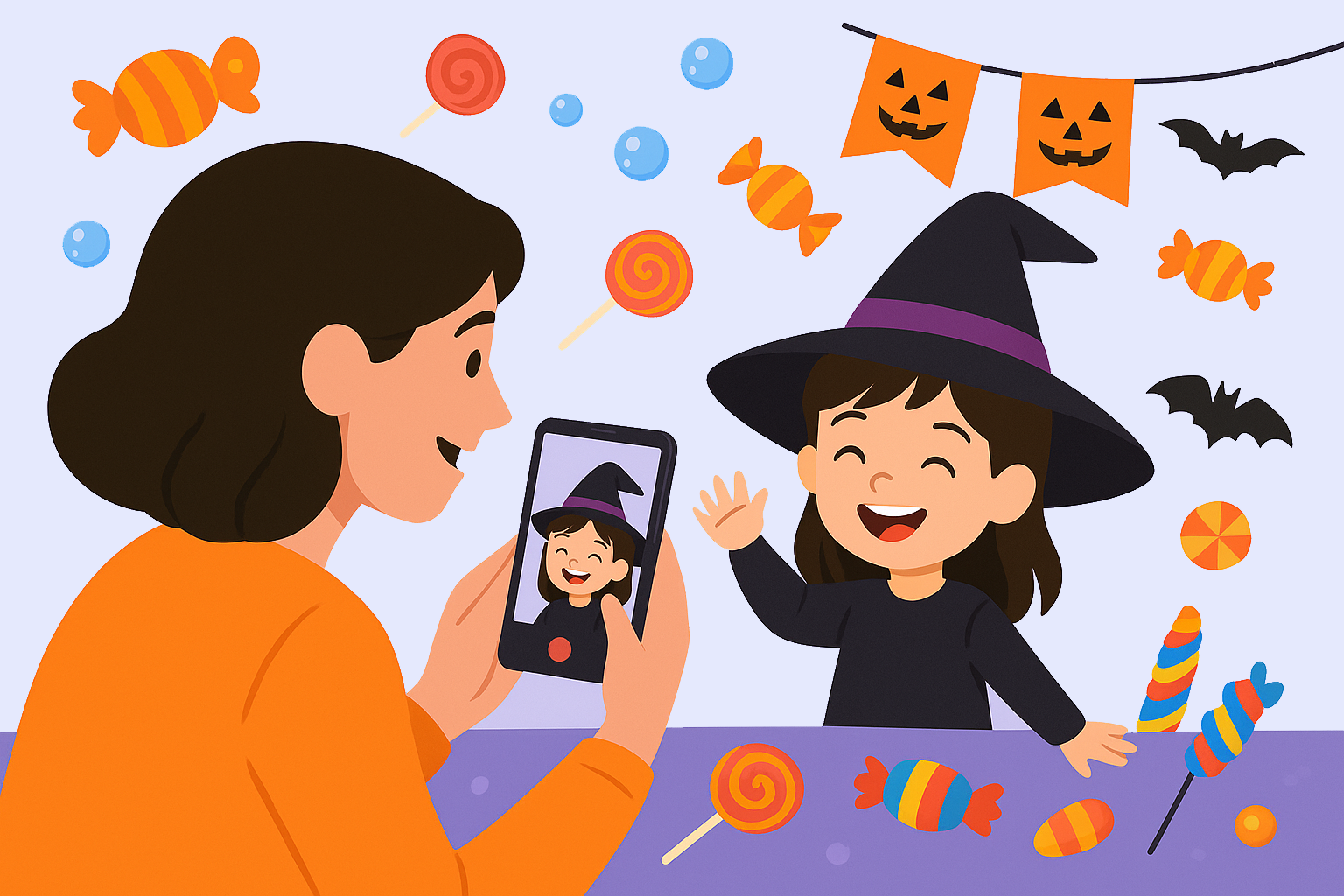
Make it memorable! 📱
Record your child telling a favorite joke or trying a silly tongue twister. Watch it together, laugh together and celebrate their effort.
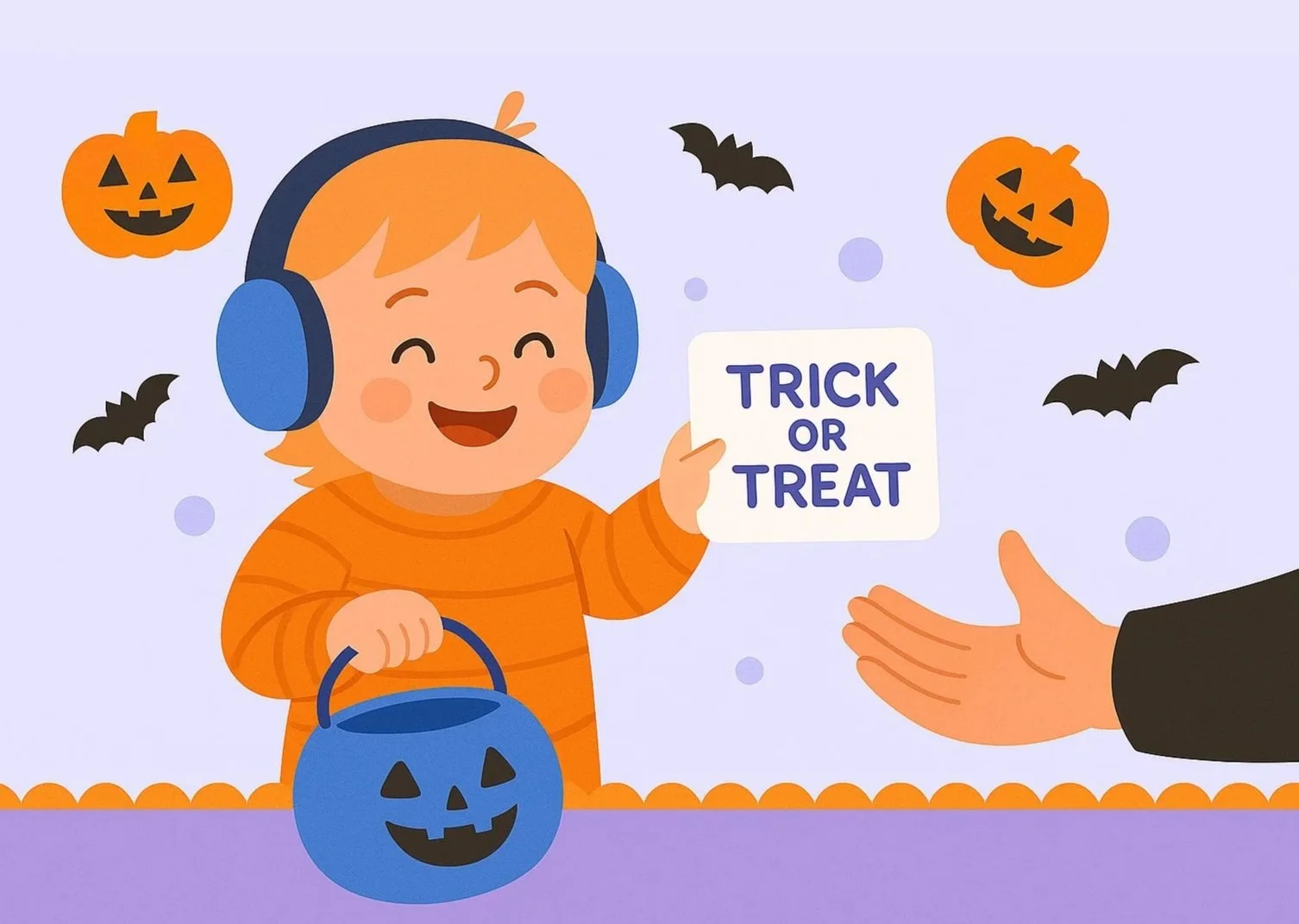
Halloween Looks Different for Every Child 💜
Not every child will say “trick or treat.”
Not every child will wear a costume.
Not every child will make eye contact, approach the door, tolerate loud sounds or stay out for very long.
And that's okay.
Children may communicate using speech, signs, gestures, pictures, AAC, pointing, eye gaze — or simply by reaching for a treat.
Halloween doesn't have to look one particular way to be successful.
A little patience, flexibility and kindness can help make Halloween more welcoming for every child.
Thanks for Playing, Talking & Learning with Me! 🎃
I hope these ideas help you see just how many opportunities for communication and learning can happen during ordinary moments of play.
You don't need special therapy materials to support your child's communication. Sometimes a Slinky, a sticker, a few pieces of candy — and a little time together — are all you need to get the conversation started.
Happy Halloween!
Miss Angie
Have Questions About Your Child’s Communication?
Every child develops differently. If you have questions about your child's speech, language or communication development, I'm happy to help you determine whether a speech and language screening may be appropriate.
Looking for more speech & language tips, developmental information and ways to support communication at home?